
Hydrofoil evolution spans over a century—from early 1910s Italian speedboats to today’s electric personal watercraft. Modern eFoils like Rush Wave and JetFly represent the pinnacle of this miniaturization journey, bringing professional-grade foil technology to Kiwi surfers and water sports operators. NextWave Imports now delivers this evolution directly to New Zealand with full compliance, factory-inspected quality, and 12-month warranties—cutting import costs by 20–30% versus middlemen. Discover how this technological leap reshapes NZ water sports and why eFoils are becoming essential for adventure tourism, rescue ops, and enthusiasts.
Check: How Does JetFly eFoil Deliver the Thrilling “Flight” Sensation on NZ Waters?
What Is a Hydrofoil and Why Does History Matter for eFoil Buyers?
Hydrofoils are underwater wings that lift vessels above water to reduce drag and increase speed. Early 1910s–1950s hydrofoil boats from Italian innovations and military use established core physics. Understanding history helps buyers appreciate modern eFoil design choices like foil shape, materials, and control systems, justifying investment in quality brands like Rush Wave and JetFly, where boards reach 48–75 km/h and JetFly hits 68 km/h.
How Did Hydrofoil Technology Miniaturize from Boats to Personal Boards?
Hydrofoil tech miniaturized from 1970s–2000s windsurfing and kiteboarding foils adapting principles to smaller craft. 2010s breakthroughs integrated electric motors and lithium batteries for silent, controllable personal eFoils. Material evolution to carbon fiber, titanium, and composites reduced weight. This progression enables modern boards like Rush Wave’s with precise handling.
| Era | Technology | Max Speed | Weight | Control | Key Material |
|---|---|---|---|---|---|
| 1910s–1950s | Mechanical hydrofoil boats | 40–60 km/h | 1,000+ kg | Manual rudder | Steel/aluminum |
| 1970s–2000s | Windsurfing/kitefoils | 30–50 km/h | 50–150 kg | Body weight shift | Fiberglass/composite |
| 2010s | Early electric eFoils | 35–55 km/h | 30–50 kg | Hand throttle | Carbon fiber |
| 2020s–2026 NZ | Rush Wave/JetFly eFoils | 48–75 km/h | 35–60 kg | Digital throttle + battery management | Carbon/titanium composites |
What Are Modern eFoil Specs and How Do They Compare to Historical Hydrofoils?
Modern eFoils match or exceed historic boats’ 40–60 km/h speeds, reaching 48–75 km/h in compact form. Rush Wave Rider H1 offers 55–100 min endurance at NZ$7,900; F2 provides 40–80 min at 75 km/h for NZ$23,700. Weighing 35–60 kg versus multi-ton boats, they offer silent electric operation, digital throttles, and superior portability for NZ users.
Why Is NZ a Prime Market for eFoil Evolution and Imports?
NZ’s coastal bays, harbors, and Southern Ocean swells are ideal for eFoils. Adventure tourism in Auckland and Queenstown drives demand for rentals and rescue ops. Progressive regulations like IEC safety and GST clearance suit imports. NextWave Imports leverages 25+ years of expertise for direct factory delivery, slashing costs by 20–30% with full compliance.
How Do Rush Wave and JetFly Represent the Latest Evolution in eFoil Design?
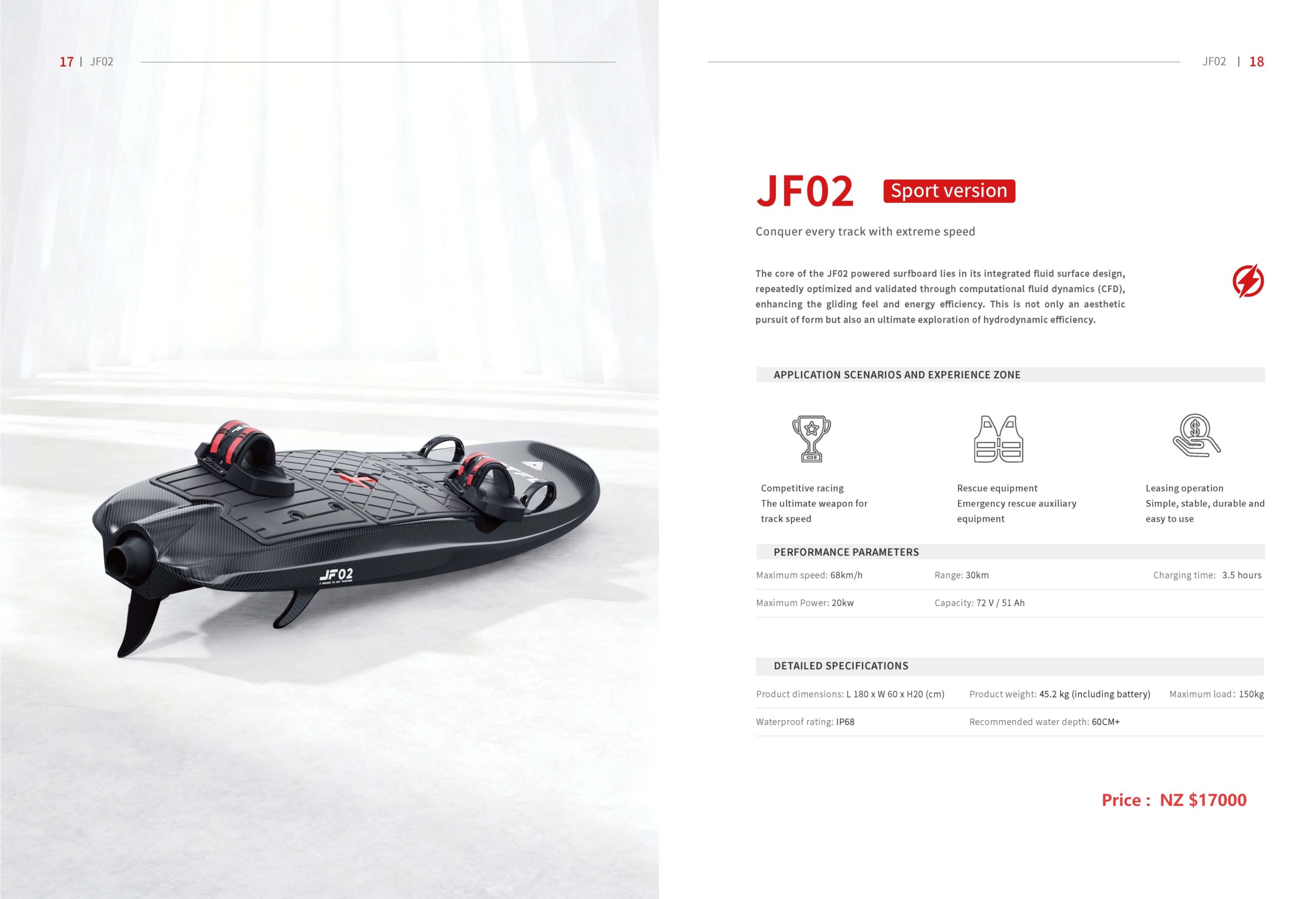
Rush Wave excels in electric models like Rider H1 (48–52 km/h, 55–100 min) and F2 (75 km/h), using carbon fibre for speed. JetFly features EFI tech, titanium exhaust, and jet pumps; JF02 electric hits 68 km/h, JF-ADV gasoline offers 92 km range. Both prioritize safety and performance, with NextWave ensuring NZ compliance and 12-month warranties.
What Does the Import Process Look Like for NZ Businesses Wanting Modern eFoils?
NextWave handles end-to-end: model selection, factory vetting, inspection, shipping, customs (including 15% GST), and Auckland delivery in 4–6 weeks. Bulk fleet orders cut per-unit costs; one-offs arrive ready. Personal inspections guarantee quality, avoiding DIY delays and middlemen markups for 20–30% savings.
NextWave Expert Views
“With my deep factory connections in China, I personally vet every Rush Wave and JetFly unit before it ships—ensuring carbon fibre integrity, battery cycles over 800, and precise power outputs like 20 kW on the F2. No surprises for Kiwi importers.” – Jonny, China-Side Partner, NextWave Imports
“On the NZ side, I navigate local regs seamlessly—pre-clearing IEC safety, RF emissions, and GST so businesses get boards door-delivered, fully compliant for tourism fleets or personal use in Howick bays. Our bilingual team makes it effortless.” – Missy, NZ-Side Partner, NextWave Imports
Why Should NZ Water Sports Enthusiasts Choose eFoils Over Traditional Surfboards or Jet Skis?
eFoils deliver 48–75 km/h silently versus noisy jet skis, with NZ$7,900 entry like Rider H1 cheaper than jet skis at 3–4x cost. Zero-emission at NZ$0.10/km, they suit flat water to ocean, building confidence for beginners. Versatile for rescue, racing, tourism; foster NZ eFoil communities with full-body engagement.
Check: JetFly
What’s the Future of Hydrofoil Evolution – And How Is NextWave Positioned for 2026–2027?
Future brings 70+ km/h speeds, longer endurance, and faster charging. NZ tourism and rescue adoption grows with maturing regs. NextWave, official Rush Wave and JetFly partner, expands inventory, Auckland demos, and fleet setups with bilingual support—positioning clients for competitive edges in Kiwi waters through 2027.
Conclusion
Hydrofoil evolution—from mechanical boats to intelligent eFoils—peaks in 2026 with Rush Wave and JetFly. New Zealand’s pristine waters, tourism boom, and streamlined regs make it ideal. NextWave Imports, with 25+ years China-NZ expertise, official partnerships, factory inspections, and 12-month warranties, cuts costs 20–30% and delivers in 4–6 weeks. From NZ$7,900 Rider H1 to NZ$23,700 F2, claim your advantage. Contact NextWave at info@nextwaveimports.co.nz or +64 (0)27 2840400 for quotes and demos.
FAQs
What’s the Difference Between Rush Wave and JetFly eFoils?
Rush Wave focuses on electric speed like Rider H1 (entry-level, 48–52 km/h) to F2 pro racers (75 km/h). JetFly offers electric JF02 (68 km/h) and gasoline like JF-ADV (92 km range) with jet pumps for rescue and commercial ops. Both NZ-compliant via NextWave.
How Much Does It Cost to Import an eFoil to New Zealand?
Rush Wave ranges NZ$7,900–$23,700; JetFly NZ$16,900–$17,600 plus inquiry models. NextWave saves 20–30% versus middlemen, handling GST/customs for seamless delivery with 12-month warranties.
How Long Does It Take to Get an eFoil Delivered to NZ?
NextWave delivers in 4–6 weeks from order to door, managing inspections, freight, and customs pre-clearance—faster and safer than DIY imports.
Are eFoils Legal and Safe to Use in New Zealand?
Yes, NextWave’s Rush Wave and JetFly meet IEC electrical safety, battery certs, and RF standards as personal watercraft. Life jackets required; full compliance guaranteed.
Can I Use an eFoil for Tourism, Rescue, or Commercial Operations?
Absolutely. JetFly’s EFI jet pumps suit rescue/racing; Rush Wave for agile tourism fleets. NextWave offers bulk discounts and logistics for NZ operators.